nonFiction
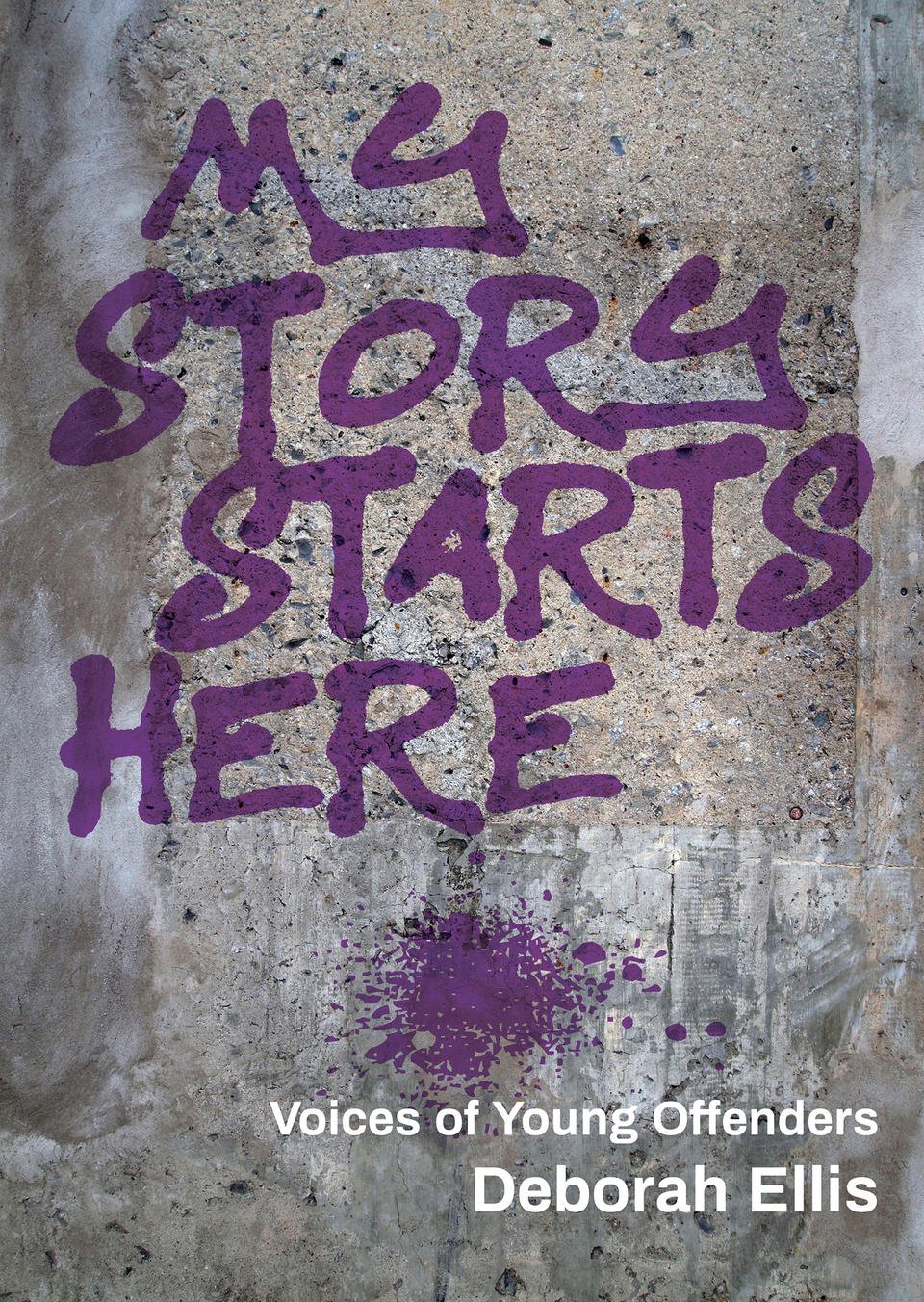
My Story Starts Here
ages 12 and up / grades 7 and up
-
October 2019 | 9781773061214 | Paperback | $18.95
September 2019 | 9781773061344 | Ebook | $14.95
Deborah Ellis, activist and award-winning author of The Breadwinner interviews young people involved in the criminal justice system and lets them tell their own stories.
Jamar found refuge in a gang after leaving an abusive home where his mother stole from him. Fred was arrested for assault with a weapon, public intoxication and attacking his mother while on drugs. Jeremy first went to court at age fourteen (“Court gives you the feeling that you can never make up for what you did, that you’re just bad forever”) but now wears a Native Rights hat to remind him of his strong Métis heritage. Kate, charged with petty theft and assault, finally found a counselor who treated her like a person for the first time.
Many readers will recognize themselves, or someone they know, somewhere in these stories. Being lucky or unlucky after making a mistake. The encounter with a mean cop or a good one. Couch-surfing, or being shunted from one foster home to another. The kids in this book represent a range of socioeconomic backgrounds, genders, sexual orientations and ethnicities. Every story is different, but there are common threads — loss of parenting, dislocation, poverty, truancy, addiction, discrimination. The book also includes the points of view of family members as well as “voices of experience” — adults looking back at their own experiences as young offenders.
Most of all, this book leaves readers asking the most pressing questions of all. Does it make sense to put kids in jail? Can’t we do better? Have we forgotten that we were once teens ourselves, feeling powerless to change our lives, confused about who we were and what we wanted, and quick to make a move without a thought for the consequences?
-
Commended, The List, Toronto Public Library, 2020
Commended, In the Margins Recommended Nonfiction List, 2020
-
“Young people of different genders, sexual orientations, and ethnicities share powerful stories of being incarcerated or homeless … poignant, hopeful, and rage-inducing.” — Booklist
“A worthy addition to a middle or high school library…” — School Library Journal
“The stories are compelling and dark … A powerful collection.” — Kirkus Reviews
-
illustrations
photographs
further reading
glossary
resources -
Correlates to the Common Core State Standards in English Language Arts:
CCSS.ELA-LITERACY.RI.6.2
Determine a central idea of a text and how it is conveyed through particular details; provide a summary of the text distinct from personal opinions or judgments.CCSS.ELA-LITERACY.RI.6.6
Determine an author's point of view or purpose in a text and explain how it is conveyed in the text.CCSS.ELA-LITERACY.RI.6.8
Trace and evaluate the argument and specific claims in a text, distinguishing claims that are supported by reasons and evidence from claims that are not.

Looks Like Daylight
ages 12 and up / grades 7 and up
-
August 2018 | Paperback | 9781554981212 | $14.99
September 2013 | Ebook | 9781554984138 | $8.99
Author Deborah Ellis travels across the continent, interviewing more than forty Native American kids and letting them tell their own stories.
They come from all over the continent — from Iqaluit to Texas, Haida Gwaii to North Carolina. Their stories are sometimes heartbreaking; more often full of pride and hope.
You’ll meet Tingo, who has spent most of his young life living in foster homes and motels, and is now thriving after becoming involved with a Native Friendship Center; Myleka and Tulane, young Navajo artists; Eagleson, who started drinking at age twelve but now continues his family tradition working as a carver in Seattle; Nena, whose Seminole ancestors remained behind in Florida during the Indian Removals, and who is heading to New Mexico as winner of her local science fair; Isabella, who defines herself more as Native than American; Destiny, with a family history of alcoholism and suicide, who is now a writer and pow-wow dancer.
Deborah briefly introduces each child and then steps back, letting the kids speak directly to the reader. The result is a collection of frank and often surprising interviews with kids aged nine to eighteen, as they talk about their daily lives, about the things that interest them, and about how being Indigenous has affected who they are and how they see the world.
-
Winner, Aesop Prize, 2013
Commended, Notable Books for a Global Society, 2014
Commended, Cooperative Children's Book Center Choices, 2014
Winner, Social Justice Literature Award, 2014
Short-listed, Red Maple Award for Non-Fiction, 2015
Short-listed, Norma Fleck Award for Canadian Children's Non-Fiction, 2014
Commended, Notable Books for a Global Society, 2014
Short-listed, Red Maple Award, 2015
-
⭐️ “It’s heartening that so many of these young people are positive about their lives, no matter how troubled, and about their futures....Ellis’ book is an excellent opportunity for classroom discussion and individual, empathy-inducing reading.” — Booklist, STARRED REVIEW
“[T]hese young people embrace their distinctive cultural practices and almost without exception, express a buoyant attitude. As gay Chippewa 16-year-old Zack puts it, 'They tried really hard to kill us all off, and we’re still here!'—a welcome and necessary reminder to all.” — Kirkus Reviews
“Ellis’s transcriptions of these interviews allow the authentic voices of the young people to come through...Important and provocative, this is a good choice for libraries wanting to add a contemporary, youthful perspective on issues affecting indigenous people in North America.” — School Library Journal
“[O]ften simultaneously heartbreaking and hopeful...Unflinching and informative, this volume will appeal to a broad range of readers.” — Bulletin of the Center for Children's Books
-
Correlates to the Common Core State Standards in English Language Arts:
CCSS.ELA-LITERACY.RI.6.3
Analyze in detail how a key individual, event, or idea is introduced, illustrated, and elaborated in a text (e.g., through examples or anecdotes).CCSS.ELA-LITERACY.RI.6.6
Determine an author's point of view or purpose in a text and explain how it is conveyed in the text.CCSS.ELA-LITERACY.RI.6.9
Compare and contrast one author's presentation of events with that of another (e.g., a memoir written by and a biography on the same person).

Kids of Kabul
ages 12 and up / grades 7 and up
-
May 2012 | Paperback | 9781554981823 | $12.95
May 2012 | Ebook | 9781554982035 | $9.95
Since its publication in 2000, hundreds of thousands of children all over the world have read and loved The Breadwinner, the fictional story of eleven-year-old Parvana living in Kabul under the terror of the Taliban. But what happened to Afghanistan’s children after the fall of the Taliban in 2001? In 2011, Deborah Ellis went to Kabul to find out.
The twenty-six boys and girls featured in this book range in age from ten to seventeen, and they speak candidly about their lives now. They are still living in a country at war. Violence and oppression exist all around them. The situation for girls has improved, but it is still difficult and dangerous. And many children — boys and girls — are still supporting their families by selling items like pencils and matches on the street.
Yet these kids are weathering their lives with remarkable courage and hope, getting as much education and life experience and fun as they can.
All royalties from the sale of Kids of Kabul will go to Canadian Women for Women in Afghanistan, which administers Parvana’s Fund, supporting schools, libraries and literacy programs for Afghan women and children.
-
Commended, USBBY Outstanding International Book List, 2013
Commended, IRA Notable Books for a Global Society, 2013
Commended, CCBC Choice Book, 2013
Joint winner, South Asia Book Award, 2013
Long-listed, Children's Literature Roundtables of Canada Information Book Award, 2013
Commended, The Bankstreet College of Education's Best Books of the Year 2013, 2013
Winner, Norma Fleck Award for Canadian Children's Non-Fiction, 2013
Short-listed, TD Canadian Children's Literature Award, 2013
-
“It’s a gritty, poignant, and intensely personal glimpse into the effects of war and poverty.” — Publisher's Weekly
“This nuanced portrayal of adolescence in a struggling nation refrains, refreshingly, from wallowing in tragedy tourism and overwrought handwringing.” — Kirkus Reviews
“With a succinctly written opening for each interview, Ellis provides valuable historical, social, political and cultural context. A beautifully written introduction, thorough glossary and a list of organizations and books for additional information further round out the book. A must have for most libraries.” — CCBN
“Young readers will likely appreciate Ellis’s approach, which renders social and political trends in one of the world’s most volatile regions accessible by focusing on the experiences of kids their own age.” — Quill & Quire
“Each of their stories is introduced with relevant, contextual, cultural details from Ellis’ sharp observations.” — Smithsonian
-
Correlates to the Common Core State Standards in English Language Arts:
CCSS.ELA-LITERACY.RI.5.6
Analyze multiple accounts of the same event or topic, noting important similarities and differences in the point of view they represent.CCSS.ELA-LITERACY.RI.6.6
Determine an author's point of view or purpose in a text and explain how it is conveyed in the text.CCSS.ELA-LITERACY.RI.6.9
Compare and contrast one author's presentation of events with that of another (e.g., a memoir written by and a biography on the same person). -
photographs
maps
glossary
introduction
historical context
additional information
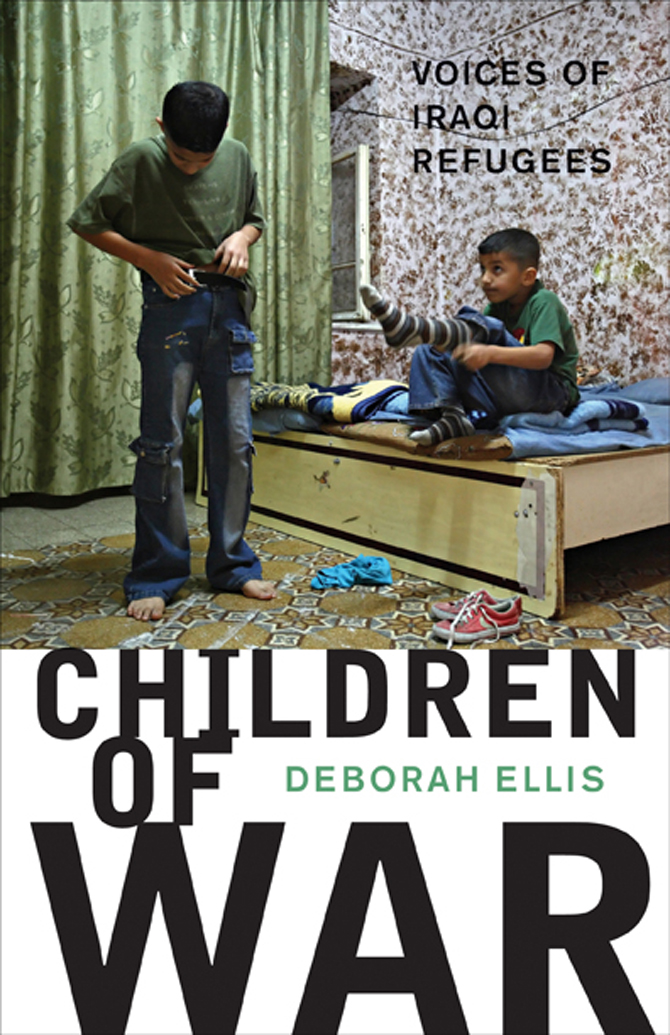
Children Of War
ages 12 and up / grades 7 and up
-
March 2009 | Paperback | 9780888999085 | $12.99
March 2009 | Ebook | 9781554980086 | $9.99
USBBY Outstanding International Books Honor List
In this book, Deborah Ellis turns her attention to the most tragic victims of the Iraq war -- Iraqi children. She interviews young people, mostly refugees living in Jordan, but also a few who are trying to build new lives in North America. Some families have left Iraq with money; others are penniless and ill or disabled. Most of the children have parents who are working illegally or not at all, and the fear of deportation is a constant threat.
Ellis provides an historical overview and brief explanations of context, but other than that allows the children to speak for themselves, with minimal editorial comment or interference. Their stories are frank, harrowing and sometimes show surprising resilience, as the children try to survive the consequences of a war in which they played no part. A glossary, map and suggestions for further information are included.
-
Long-listed, OLA Silver Birch Nonfiction Award, 2010
Commended, USBBY Outstanding International Books, 2010
-
“A collection of heartrending entries based on interviews with displaced kids...The introduction offers a clear, concise summary of the events...and the photographs accompanying the stories personalize the harrowing plights.” — School Library Journal
“The Stories are poignant, heart wrenching, and ring with truth...†...a starting point for a disscussion on the impact of war on children from the childs perspective.” — VOYA (Voice of Youth Advocates)
“...there's no real room for doubt that [the children's] grim attitudes...[and] outlook on the future, are painfully authentic.” — Bulletin of The Center for Children's Books
⭐️ “...The voices are poignant, insightful, angry and hopeful...Photographs of the interviewes and a glossary round out an important chronicle of war and the world's most vulnerable-the children.” — Kirkus Reviews, STARRED REVIEW
⭐️ “An important, current title that will have lasting significance.” — Booklist, STARRED REVIEW
“Ellis gives children a voice that they may not otherwise have the opportunity to express so readily in the mainstream media...[Children of War] exposes the complexity of the issues surrounding the war, and discourages any simplistic understandings that her readers may have held about the war's origins...A significant strength of this book is its accessibility for readers of all ages and cultural backgrounds...Highly recommended.” — CM Magazine
“Eye-opening...unforgettable and thought-provoking...the contrast between the simple language of these child refugees and the horrific events they relate is wrenching.” — Quill & Quire
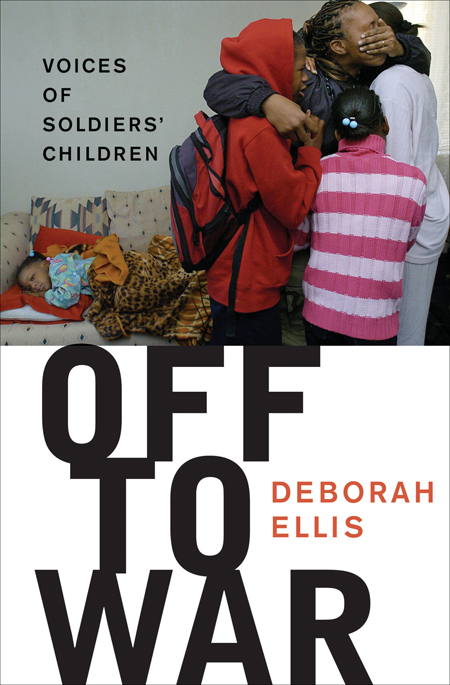
Off to War
ages 9 and up / grades 4 and up
-
August 2008 | Paperback | 9780888998958 | $12.95
August 2008 | Ebook | 9781554980284 | $9.95
Society of School Librarians International Honor Book
Deborah Ellis has been widely praised for her gripping books portraying the plight of children in war-torn countries. Now she turns her attention closer to home, to the children whose parents are soldiers fighting in Afghanistan and Iraq.
In frank and revealing interviews, they talk about how this experience has marked and shaped their lives.The children, who range in age from 7 to 17, come from all over North America. They were interviewed on military bases, in the streets, in their homes and over the phone. The strength of Off to War is that the children are left to speak for themselves, with little editorial interference beyond a brief introduction.
Includes a glossary, a list of organizations and websites and suggestions for further reading.
-
Commended, SSLI Honor Book, 2009
Commended, Library Media Connection (LMC) Editor's Choice Awards - Social Studies, 2008
-
“...the voices of these children remind us that when we send an Army off to war, we are sending human beings with families and friends...Ellis offers reader a fascinating, and sometimes searing glimpse into these children's lives as she briefly introduces them and allows them to tell their stories in their own words...compulsively readable.” —Scripps Howard News Service
“...gives voice to the children of Canadian and American soldiers...it is their accumulation that makes an impact...Ellis continues to be an important voice of moral and social conscience...” —Kirkus Reviews
“Ellis...comes home to share stories that remind us that the human cost of war is borne not just by those who fight, but by their families...a rare and deeply affecting glimpse into the lives of children whose voices are seldom heard...a powerful and eloquent statement about the families of the men and women who fight for our country, and the burden they bear” —PR Newswire
“Powerful and eloquent, Ellis' subjects are sad, scared, funny, angry and loving - just like all kids, but maybe more deeply...Kids with deployed parents will certainly find comfort in the similar feelings and voices of other kids going through the same.” —Copley News Service
“...tough, thought-provoking inquiries on subjects ranging from the way the household functions during parental absence, to the way the family adjusts to a soldier's return...Touching and insightful, these voices will appeal to a broad range of readers.” —Bulletin of the Center for Children's Books
“...Ellis has struck a perfect balance here. This is the kind of book that children from military families will want to read, while civilians...will find that the range of opinions and types of kids in the collection yield fascinating stories...I look forward to reading Ellis's next book, Children of War: Voices of Iraqi Refugees.” —School Library Journal
“Accessible and utterly readable, this book offers a glimpse into current home-front life, and is a primary source of what it means to have a family member serving in a war...the book is an excellent resource for opening discussions about the current events.” —School Library Journal
“Ellis tells everything without sensationalism...The personal voices are unforgettable.” —Booklist
“Readers will empathize with these children whose lives have been upended by circumstances beyond their control.” —Horn Book

Three Wishes
ages 11 and up / grades 6 and up
-
June 2004 | Paperback | 9780888996459 | $9.95
June 2004 | Ebook | 9781554980451 | $9.95
Deborah Ellis presents the stories of children of the war-torn Middle East, based on interviews with Israeli and Palestinian children.
In a rehabilitation center for disabled children, twelve-year-old Nora says she loves the color pink and chewing gum and explains that the wheels of her wheelchair are like her legs. Eleven-year-old Mohammad describes how his house was demolished by soldiers. And we meet twelve-year-old Salam, whose older sister walked into a store in Jerusalem and blew herself up, killing herself and two people, and injuring twenty others. All these children live both ordinary and extraordinary lives. They argue with their siblings. They dream about their wishes for the future. They have also seen their homes destroyed, their families killed, and they live in the midst of constant upheaval and violence.
This simple and telling book allows children everywhere to see those caught in the Israeli-Palestinian conflict as children just like themselves, but who are living far more difficult, dangerous lives.
-
Short-listed, Rocky Mountain Book Award, 2007
Long-listed, OLA Silver Birch Award, 2006
Long-listed, BC Teen Reader's Choice Award Stellar Awards, 2006
Commended, CCBC Our Choice (Starred Selection), 2005
Commended, Cooperative Children's Book Center Choice - Best of the List, 2005
Commended, Pennsylvania School Librarians Association (PSLA) YA Top Forty (or so) List, 2005
-
“...a moving, sometimes chilling, expression of the disruption and distress created in young people's lives by the ongoing conflict in the Middle East, as well as a reminder of the human capacity for hope and renewal.” — Quill & Quire
“...it also gives a wrenching sense of childhood during a terrorist war, expressed in what appear to be genuine voices. It requires discussion after reading and would be an especially apt choice for school libraries. Recommended with reservations for Grades 5 to 12.” — Association of Jewish Libraries Newsletter
“...stirring...These young people come from diverse faiths - they are Jewish, Muslim and Christian - and yet it is the commonality of their experience that impresses the reader.” — Yellowknifer
“A balanced historical introduction provides background for the interviews in which children talk about how the choices other people have made have affected their lives. Ellis alternates Israeli and Palestinian voices and prefaces each of the accounts by an informative discussion of pertinent issues and a profile of the interviewee and his/her experiences...The candid and passionate voices in these narratives may be used to awaken interest and encourage discussion among young readers.” — Canadian Materials
⭐️ “An accessible historical overview that is fair to all sides...” — Booklist, STARRED REVIEW
“An excellent presentation of a confusing historic struggle, told within a palpable, perceptive and empathetic format.” — School Library Journal
“Here is a balanced and thought-provoking work recommended for school and public libraries.” — Multicultural Review
“Highly recommended for school and public libraries.” — Resource Links
“To read the collection as a whole is inspiring.” — VOYA (Voice of Youth Advocates)
-
Correlates to the Common Core State Standards in English Language Arts:
CCSS.ELA-LITERACY.RI.5.6
Analyze multiple accounts of the same event or topic, noting important similarities and differences in the point of view they represent.
CCSS.ELA-LITERACY.RI.6.3
Analyze in detail how a key individual, event, or idea is introduced, illustrated, and elaborated in a text (e.g., through examples or anecdotes).
CCSS.ELA-LITERACY.RI.6.6
Determine an author's point of view or purpose in a text and explain how it is conveyed in the text.